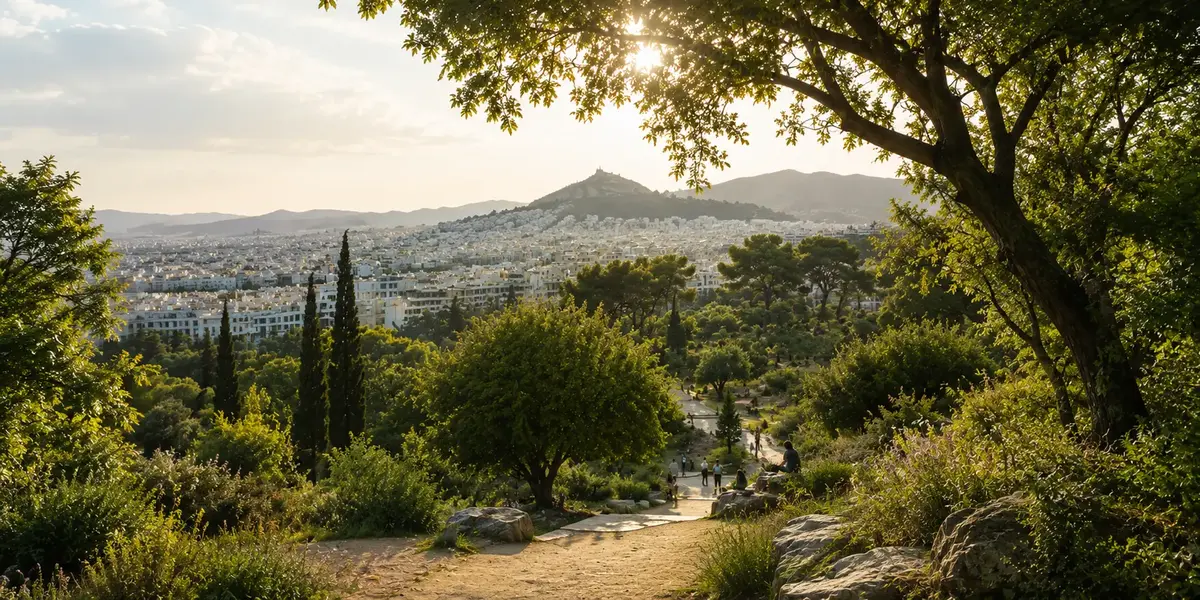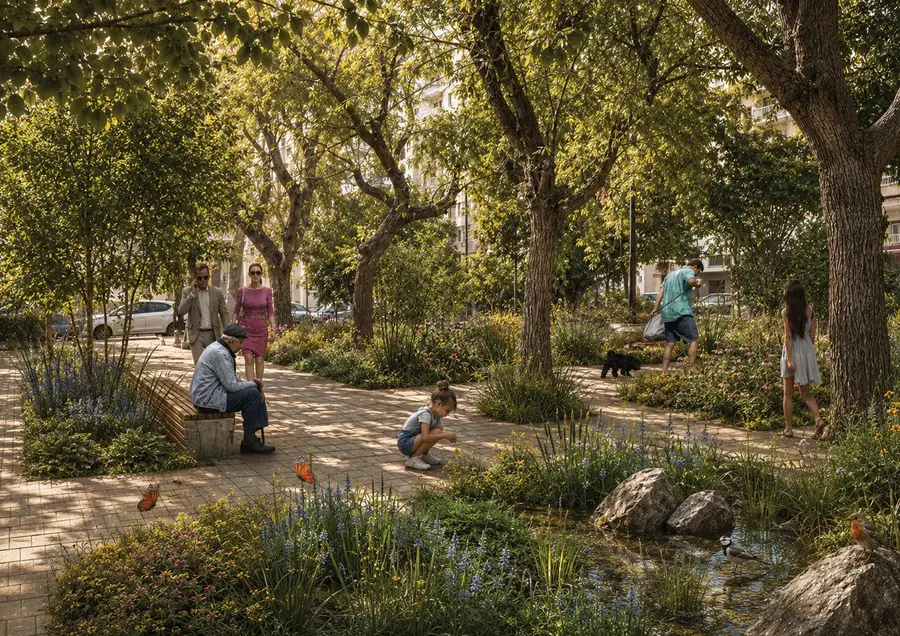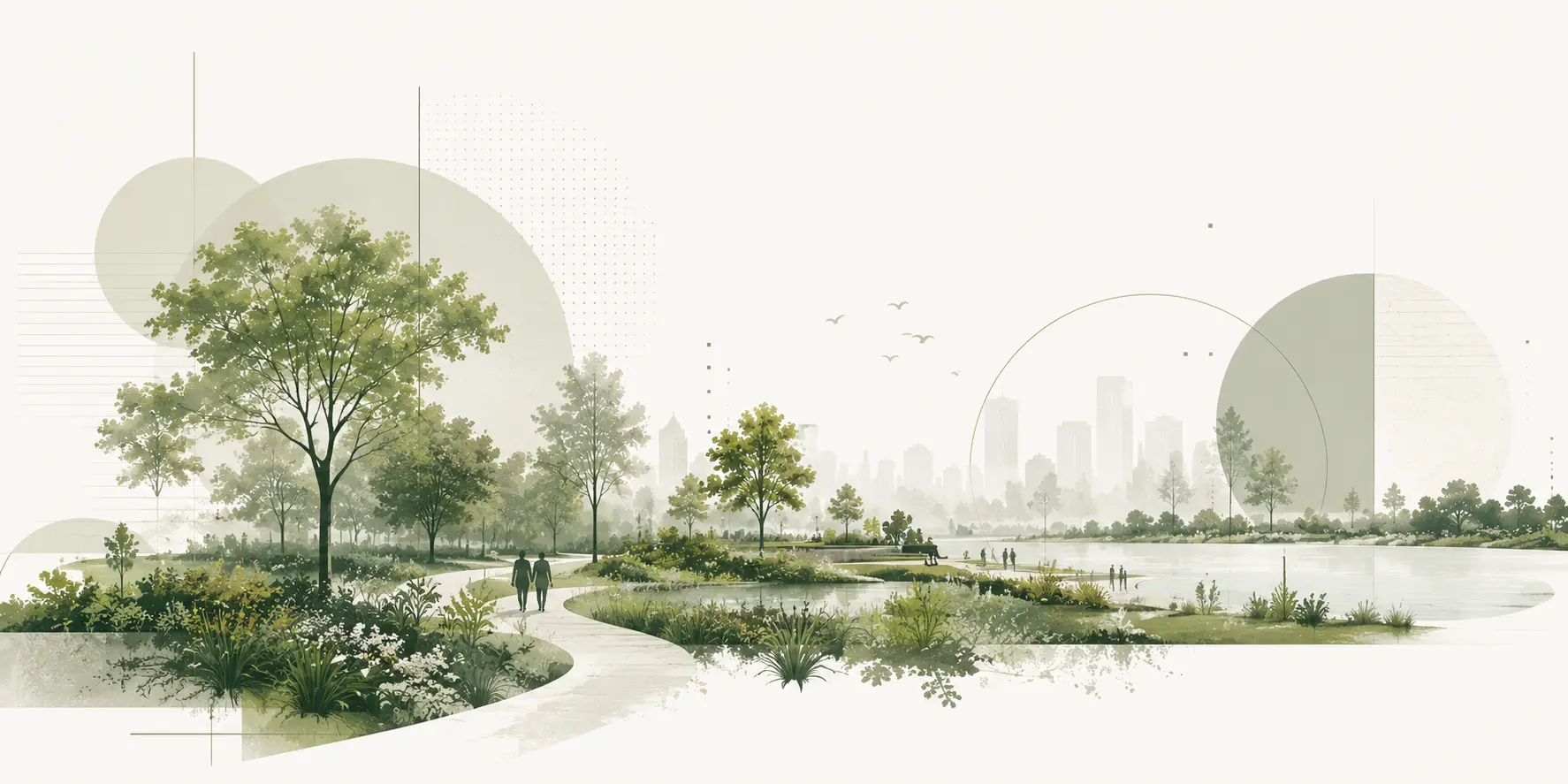
"The landscapes of the future will not be defined solely by the quality of their design, but by the quality of the knowledge that informs them. As climate change transforms our cities, landscape architecture must evolve from the creation of green spaces to the design of ecological systems that support public health, biodiversity and long-term urban resilience."
Research as Design Practice
Landscape architecture extends beyond the production of physical places. It also involves developing the principles, evidence and decision-making frameworks that shape future projects.
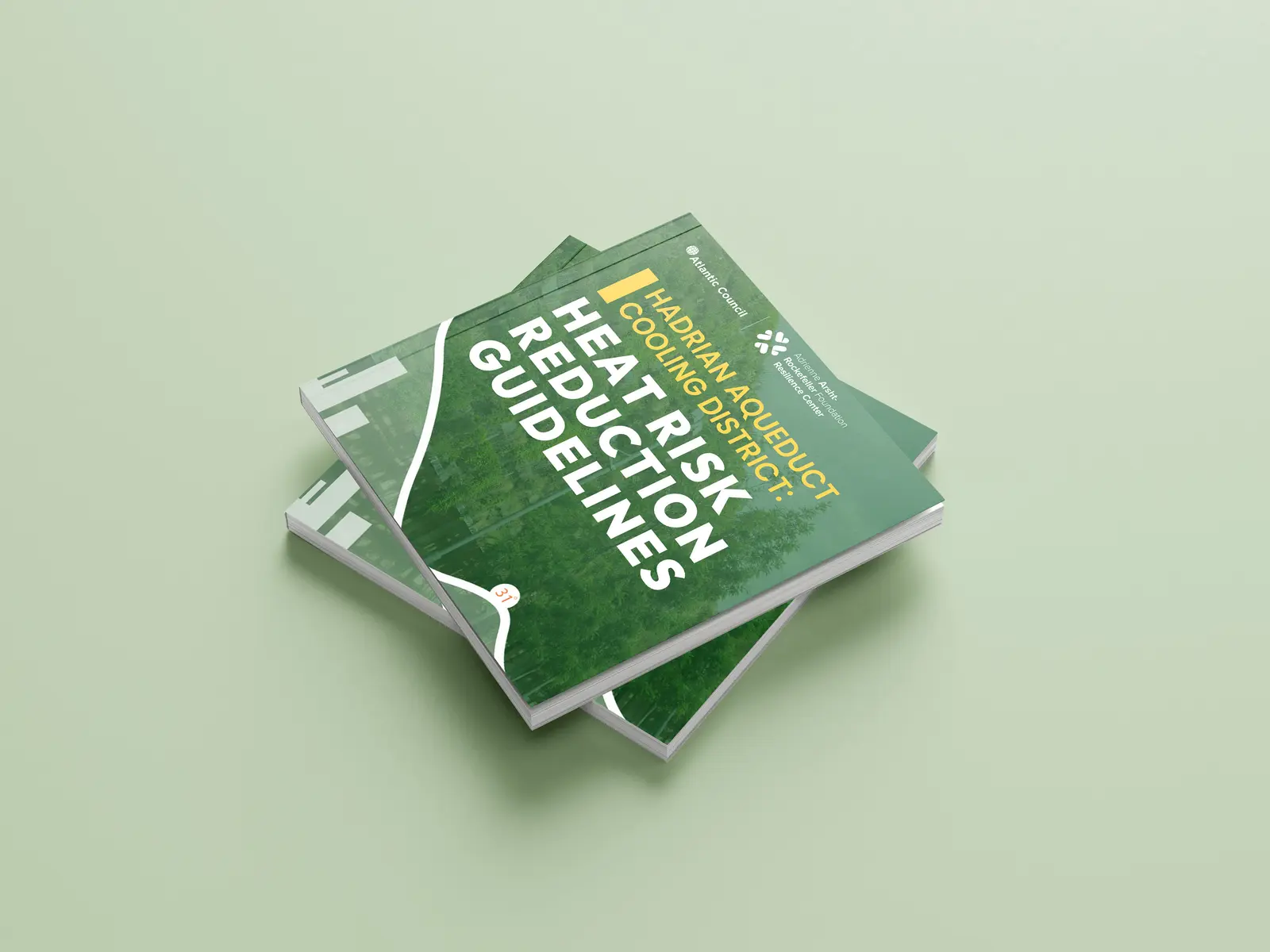
This publication was developed as a strategic research study for LAMDA Labs by 1830 lab, examining the future of public parks in Greece through the lens of climate resilience, ecology and contemporary landscape architecture. Rather than documenting a single project, the report investigates how international knowledge can be translated into practical guidance for the planning, design, implementation and long-term management of large public parks in the Greek context.
The publication was conceived as a resource for municipalities, public authorities, developers, landscape architects and interdisciplinary design teams working to deliver parks capable of responding to the environmental and social challenges of the twenty-first century.
Redefining the Role of the Park
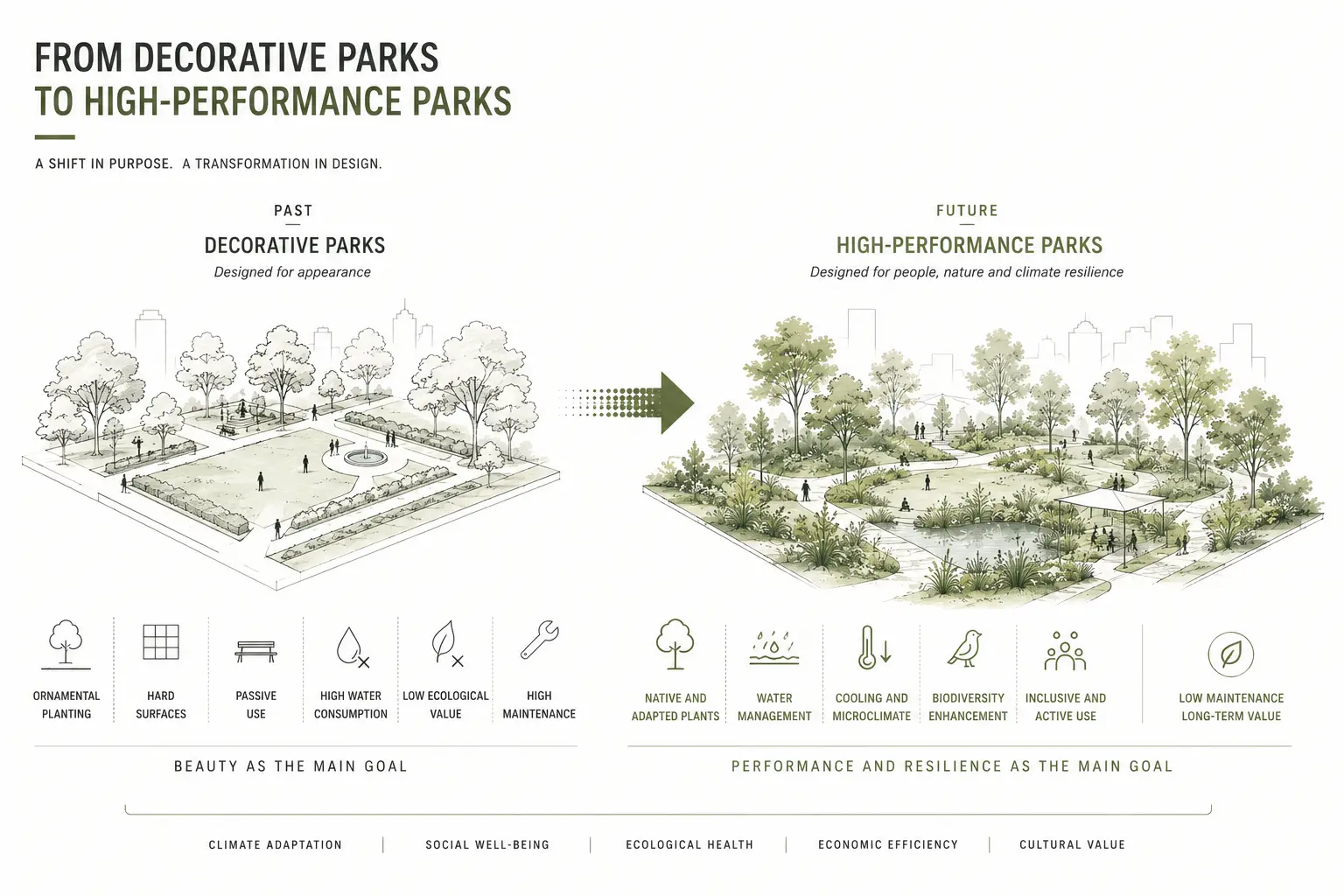
One of the central arguments developed throughout the study is that public parks can no longer be understood primarily as recreational amenities or decorative green spaces.
Instead, they must be recognised as critical urban infrastructure.
Climate change, biodiversity decline, increasing urban temperatures, water scarcity and changing demographic patterns require parks to perform simultaneously as ecological systems, social spaces and environmental infrastructure.
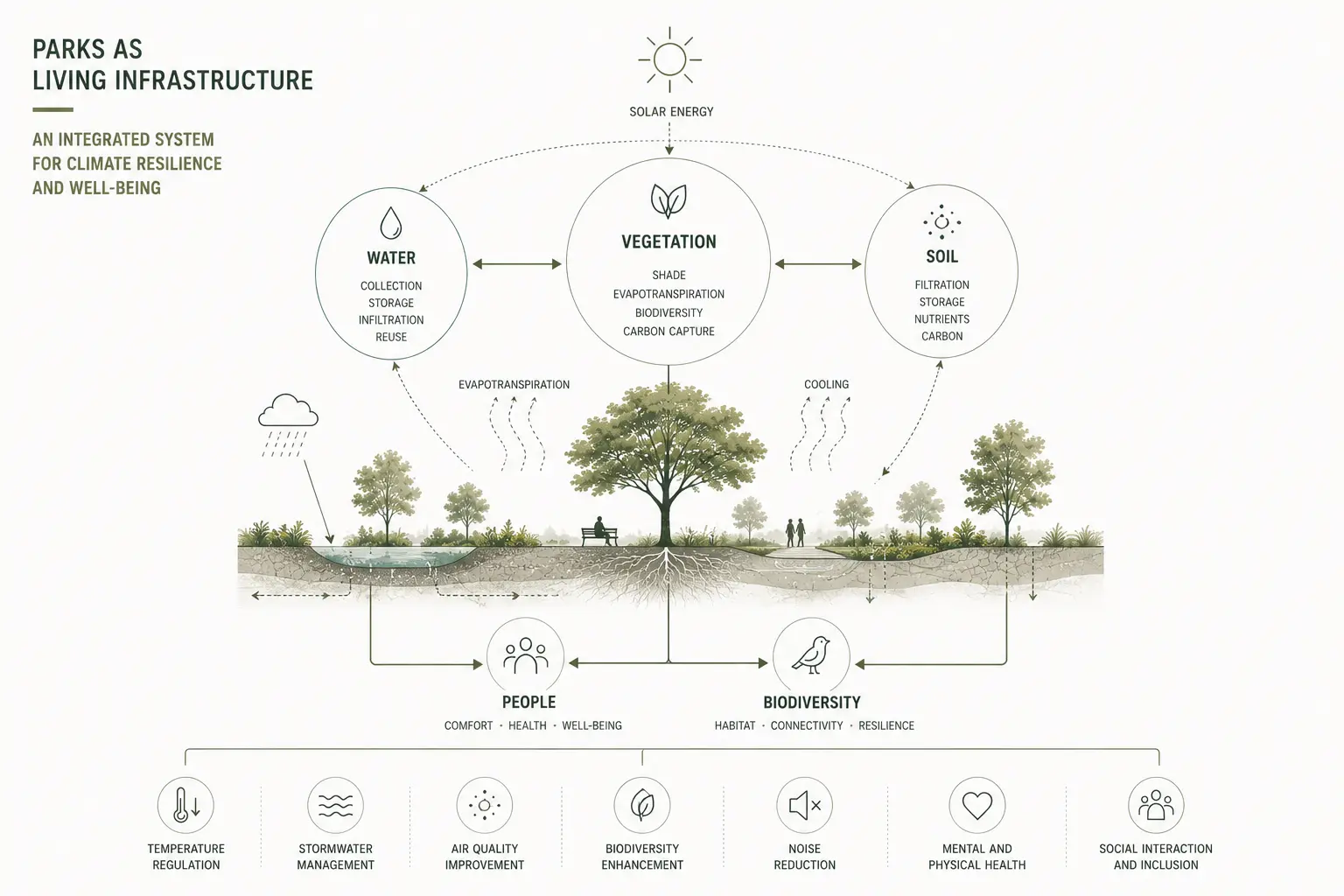
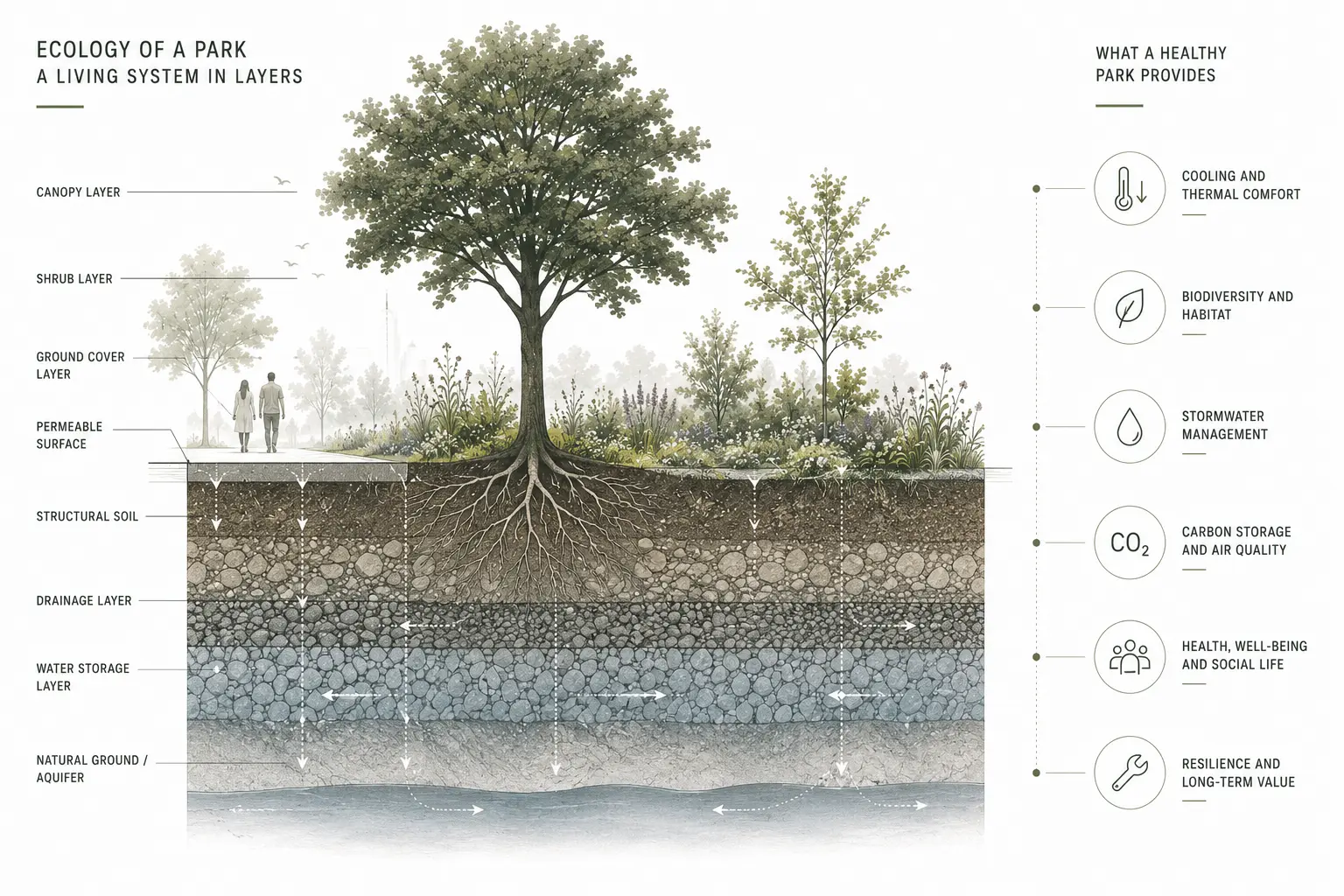
The report therefore proposes a transition from parks conceived as isolated objects towards parks understood as living systems that regulate urban microclimates, manage water, enhance biodiversity, improve public health and strengthen social cohesion.
Rather than asking how parks should look, the research asks a more fundamental question:
What should parks do?
Learning from International Landscape Architecture
The publication draws upon international landscape architecture theory, ecological urbanism and contemporary European practice to establish a new framework for park design in Greece.
Historical developments—from Renaissance gardens to the emergence of public parks, landscape urbanism and today's climate-responsive landscapes—are examined not simply as historical references but as successive transformations in society's relationship with nature and public space.
This historical perspective provides the foundation for discussing the evolving role of parks as environmental infrastructure capable of responding to complex urban challenges.
Rather than importing international precedents directly, the publication critically evaluates how global knowledge can be adapted to the specific environmental, climatic and cultural conditions of Greece.
Climate Resilience as the Primary Design Principle
A substantial part of the publication focuses on climate adaptation.
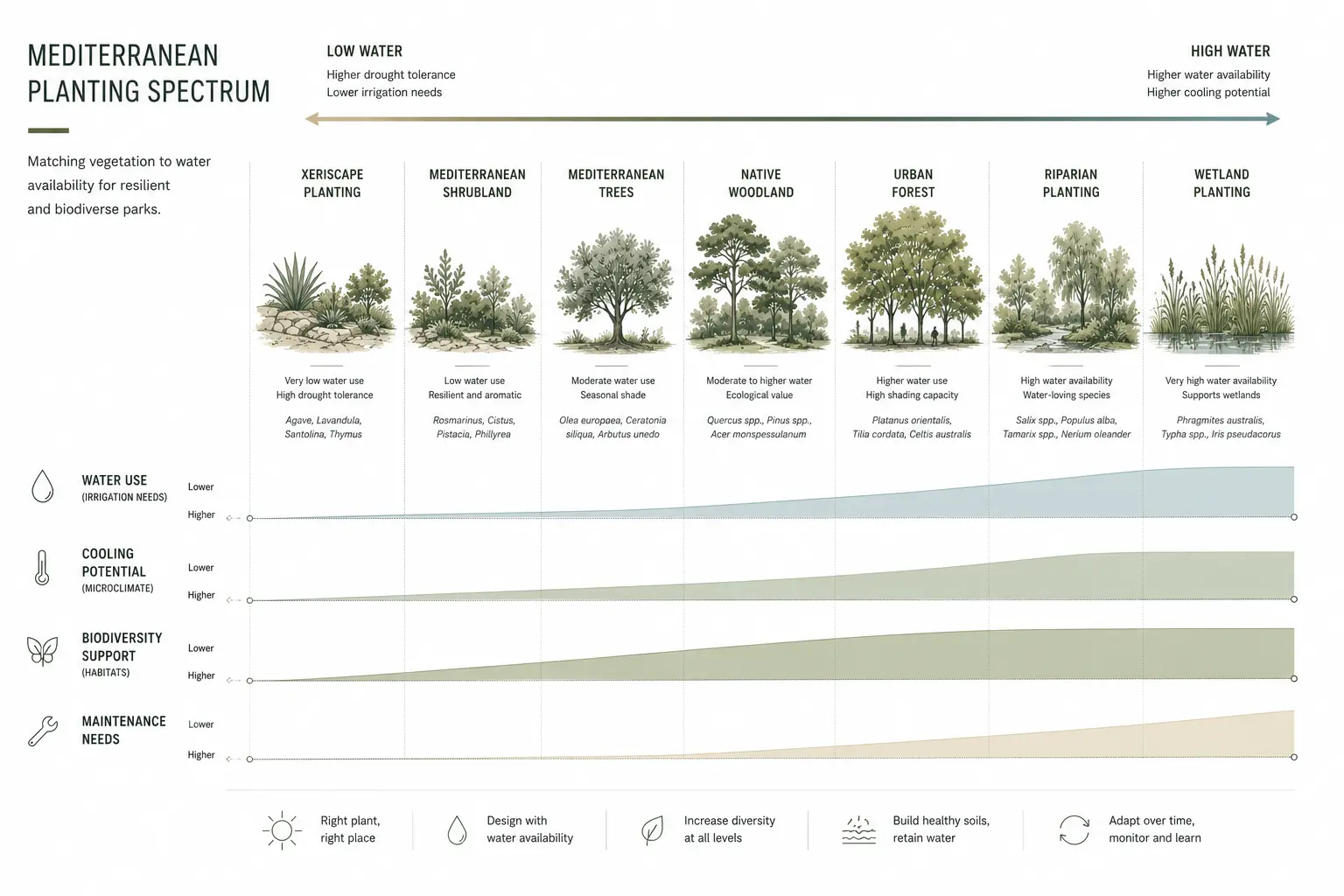
The report argues that contemporary parks should be evaluated not only by their appearance but also by their measurable environmental performance.
Topics explored include:
- urban heat mitigation
- thermal comfort
- blue-green infrastructure
- stormwater management
- biodiversity enhancement
- ecological connectivity
- carbon-aware planting strategies
- climate-resilient vegetation
- long-term environmental monitoring.
Rather than treating these themes independently, the publication demonstrates how they operate together as interconnected components of a resilient landscape system.
From Design to Measurable Performance
One of the most innovative aspects of the study is its emphasis on measurable environmental performance.
Instead of relying exclusively on qualitative design ambitions, the report proposes performance indicators capable of evaluating the long-term success of parks.
Thermal comfort indices, biodiversity indicators, water efficiency, ecological monitoring and environmental performance metrics are presented as essential tools for future decision-making.
In this way, landscape architecture is positioned not only as a design discipline but also as a field grounded in evidence, monitoring and continuous adaptation.
Parks as Living Systems
Beyond technical recommendations, the publication argues for a broader cultural transformation.
Parks are presented as living systems whose ecological processes continue long after construction.
Maintenance, governance, public participation and adaptive management become integral components of design rather than activities that occur after completion.
The report therefore proposes a lifecycle approach in which planning, implementation, monitoring and long-term stewardship are understood as inseparable parts of landscape architecture.
A Framework for Future Greek Parks
Throughout the report, the Metropolitan Park at Ellinikon serves as an important reference through which many of these principles are illustrated.
Rather than presenting the project as a singular achievement, it is used as a testing ground for broader questions concerning climate adaptation, biodiversity, thermal comfort and the future role of large metropolitan parks in Mediterranean cities.
The publication ultimately proposes a strategic framework that can inform the next generation of public parks across Greece.
Its recommendations extend beyond individual projects, offering guidance for public authorities, municipalities, designers and private developers responsible for shaping future urban landscapes.
My Contribution
As Landscape Architect and strategic consultant at ensphere GmbH, I co-authored this publication together with Lenio Myrivili, contributing to the development of its overall structure, research methodology and landscape architecture content.
My work focused on translating international research into practical design guidance for the Greek context, particularly in relation to climate adaptation, thermal comfort, blue-green infrastructure, biodiversity and water-sensitive landscape design.
I developed large parts of the publication's conceptual framework, technical recommendations and design principles, synthesising academic literature, international precedents and professional practice into a coherent document intended for both public and private stakeholders.
Working within an interdisciplinary team, I helped bridge research, design practice and policy, demonstrating how landscape architecture can support strategic decision-making before projects reach the design stage.
This publication represents an important aspect of my professional work: transforming scientific knowledge into practical frameworks that enable better landscapes to be planned, delivered and managed.
This publication bridges research, policy and professional practice, translating international landscape architecture knowledge into practical guidance for the planning, design and long-term management of climate-resilient public parks in Greece.
Publication Information
- Publication
- Contemporary Parks in Greece – A Guide for the Design and Operation of Sustainable Green Spaces
- Type of Project
- Research Publication · Strategic Advisory · Landscape Architecture Research · Climate Adaptation Framework · Design Guidelines
- Client
- LAMDA Labs – LAMDA Development S.A.
- Commissioned by
- 1830 lab
- Project Duration
- 2025–2026
- Publication Date
- February 2026
- Authors
- Lenio Myrivili — Chief Heat Officer, UN-Habitat; Special Advisor for Climate Resilience, UNEP · Dimitra Theochari — Architect & Landscape Architect, ensphere GmbH
- Scientific Direction
- Lenio Myrivili
- Research, Landscape Architecture & Strategic Development
- Dimitra Theochari (ensphere GmbH)
- Role
- Strategic Landscape Consultant · Co-author · Lead Landscape Architecture Research
- Scope
- Strategic research · Landscape architecture theory · Climate adaptation · Blue-green infrastructure · Thermal comfort · Biodiversity strategy · Water-sensitive urban design · Park planning and management · International precedent research · Design principles and policy recommendations · Performance indicators for public parks
Credits
Publication graphics, diagrams and illustrations remain © 1830 lab and the authors of the publication.
Citation: Myrivili, L. & Theochari, D. Contemporary Parks in Greece – A Guide for the Design and Operation of Sustainable Green Spaces. LAMDA Labs, February 2026.